Quick Answer
Most flat roof leaks in Batesville come from failed seams, punctured membranes around HVAC curbs, clogged drains, or deteriorated flashing at parapet walls. Detection uses visual inspection, moisture meters, infrared scans, and sometimes flood testing. Targeted repairs run a few hundred to a few thousand dollars. Full sections or recover systems cost considerably more. We document everything with photos so you can decide with full information.
How We Find the Actual Leak Source
The drip inside your building is the end of the journey, not the start. Our leak detection sequence works from the inside out and the outside in until both meet at the real entry point. Water can travel ten or twenty feet along a deck flute, an insulation seam, or a structural beam before it finally drops through a ceiling, which is why guessing rarely works on a low slope roof.
Inspection Methods We Use
- Visual survey: seams, penetrations, terminations, drains, scuppers, and field membrane condition
- Moisture meter readings: probe and non invasive scans across insulation and deck
- Infrared thermography: wet insulation holds heat differently and shows up on thermal imaging
- Water testing: controlled flooding of suspected zones when other methods are inconclusive
- Core sampling: small cuts to confirm saturation depth before pricing a repair
- Smoke testing: on sealed assemblies, low pressure smoke can reveal pinholes invisible to the eye
For complex cases where the interior damage is significant, our team coordinates moisture mapping with thermal imaging so we can mark wet insulation boundaries before opening anything up. That keeps demolition tight and repair costs predictable. On larger Batesville commercial buildings, we often combine infrared with a chalk grid so each wet zone is photographed, measured, and tied to a specific roof coordinate the crew can find again on repair day.
What to Do Before We Arrive
- Move inventory and electronics away from active drips
- Place buckets and towels, but do not climb onto a wet flat roof
- Photograph stains, drips, and any displaced ceiling tiles for insurance
- Note when the leak started and what the weather was doing
- Locate your roof warranty paperwork if you have it
- Shut down rooftop HVAC units in the affected area if it is safe to do so at the breaker
The Repair Process Step by Step
- Phone triage: we assess severity and active water intrusion so the right crew shows up with the right materials
- on site inspection: documented with photos and moisture readings, free of charge
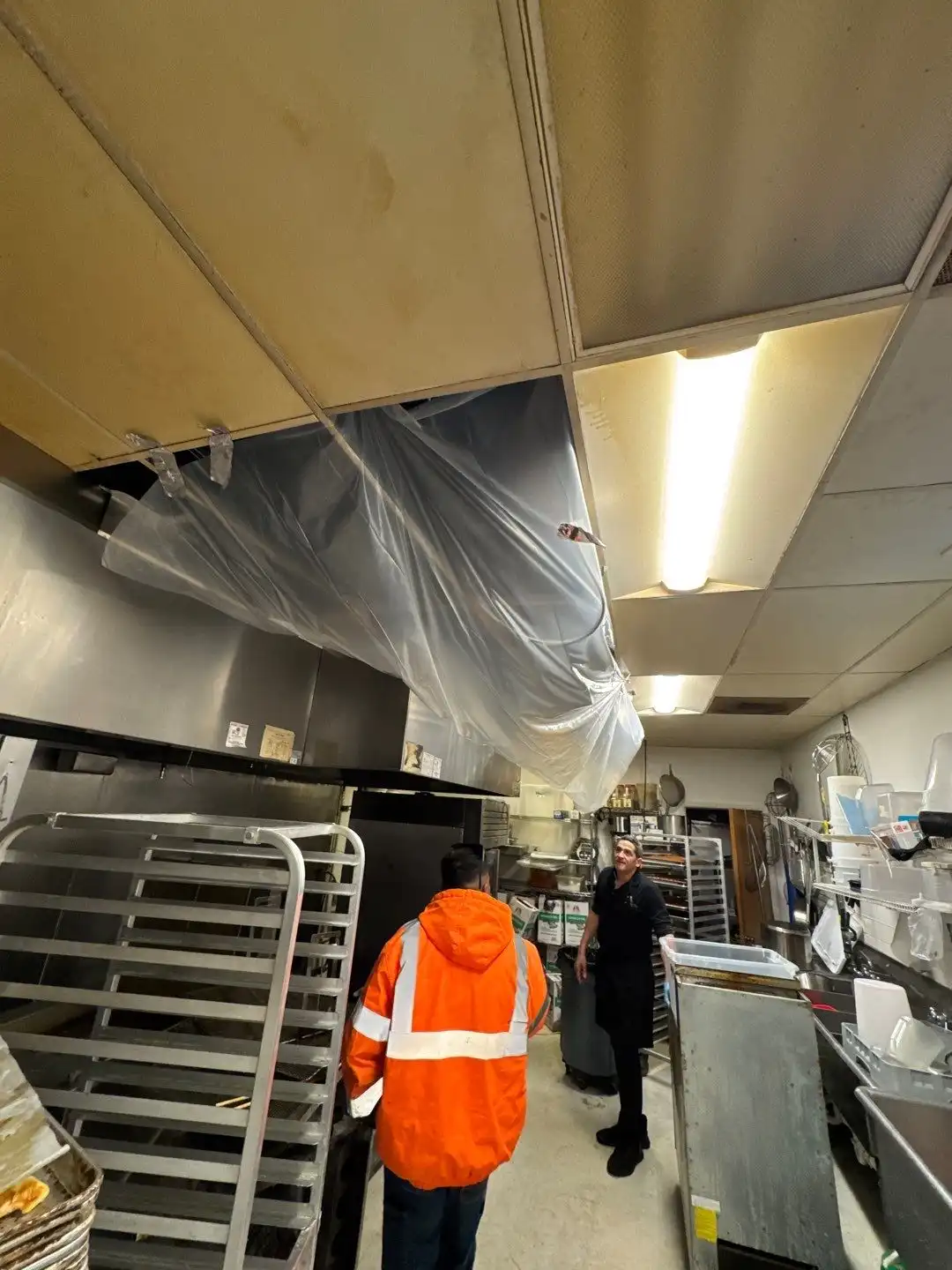
- Temporary dry in: if water is actively entering, we tarp or shrink wrap to stop further damage before scheduling permanent work
- Written estimate: scope, materials, exclusions, and what we recommend against
- Repair execution: matching membrane, proper primers, mechanical fasteners or heat welding per system
- Interior restoration: wet insulation removed, ceilings dried, finishes repaired
- Final walk: photos of completed work and care guidance
Common Failure Points on Flat Roofs
| Failure Point | Why It Leaks | Typical Fix |
|---|---|---|
| Membrane seams | Adhesive or weld degradation, thermal cycling | Re weld or seam cover strip |
| HVAC curbs and penetrations | Failed sealant, cracked boots, missing target patches | New flashing boot and termination bar |
| Parapet wall flashing | Counter flashing pulls loose, coping joints fail | Re flash, reseal coping, replace counter |
| Roof drains and scuppers | Clamping ring loose, strainer broken, ponding | Re clamp, new strainer, taper insulation |
| Punctures from foot traffic | Service techs, hail, dropped tools | Target patch with matching membrane |
| Field membrane age | UV breakdown, granule loss, brittle EPDM | Recover or replace section |
When Repair Stops Making Sense
There comes a point where chasing leaks costs more than addressing the roof as a whole. Watch for these signals:
- Multiple active leaks in different areas within one season
- Widespread ponding more than 48 hours after rain
- Membrane brittleness, blisters, or alligatoring across the field
- Wet insulation covering more than 25 percent of the roof area
- Repairs in the past 12 months exceeding 30 percent of replacement cost
- Fasteners backing out, seams opening in multiple locations, or recurring drain failures
At that threshold we walk through commercial roof replacement options, including tear off versus recover, and we explain the trade offs in plain language. For buildings where the membrane is sound but interior damage from an earlier leak is the real issue, our attic water damage from roof leaks guide covers what to expect on the restoration side.
Preventive Maintenance That Extends Roof Life
Most flat roof failures we see in Batesville were preventable with basic upkeep. A twice yearly maintenance visit usually pays for itself by catching small issues before they soak insulation or rot decking.
- Spring and fall inspections: spring catches winter damage, fall preps drains for leaf load
- Drain and scupper clearing: debris is the leading cause of ponding related leaks
- Seam and flashing checks: termination bars, pitch pans, and coping joints get resealed before they fail
- Walk pad installation: protects membrane in high traffic zones around HVAC equipment
- Documented service log: protects manufacturer warranties and supports insurance claims
Batesville Commercial Roofing can put your property on a documented maintenance schedule with photo reports after every visit, so you always know the current condition of your roof.
What Repairs Typically Cost in Batesville
Pricing also shifts based on roof height, parapet height, whether a lift or boom is required, and how easily we can stage materials. Buildings with rooftop equipment crowding the work zone often take longer, and that labor difference shows up in the estimate. Membrane type matters too: TPO and PVC repairs require heat welding and matching scrim, while EPDM relies on primers and tape that have to be applied to clean, dry substrate.